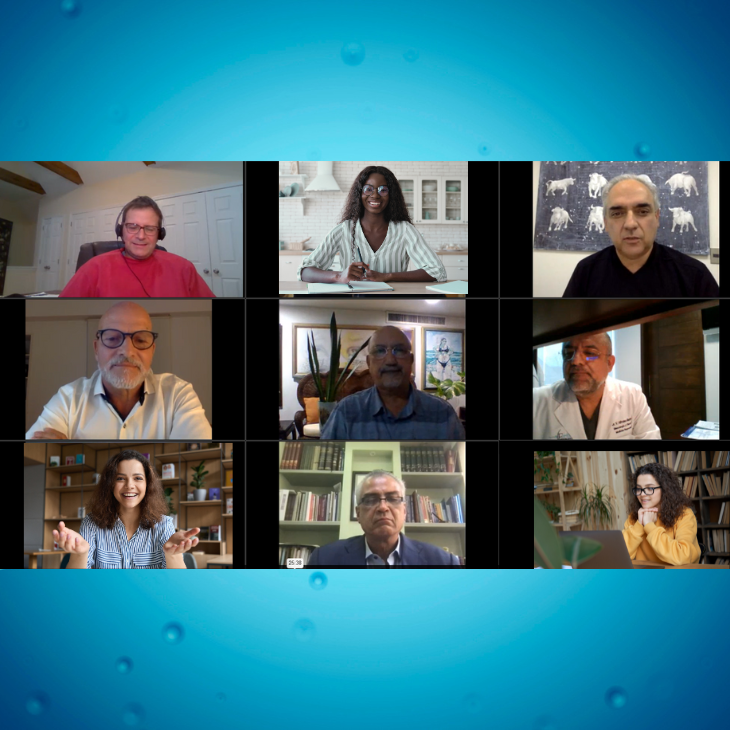
Good afternoon, good evening, good morning, whatever time it is around the world where you're joining us from. We're very excited to have you here for Fertility and Sterility Journal Club Global. We're coming to you live from one of our favorite meetings each year, the SRAI Fellows Symposium, which this year is virtual instead of being in Park City.
But we have an amazing panel here today to debate the topic, does the endometrium play a major role in endometriosis associated infertility? And the fellows at this meeting asked if they could debate the faculty. So for the first time, it is fellows versus faculty. And we will go through these questions and decide at the end which side we agree with.
So I'll introduce our discussants as we get to them one at a time. And we're going to start first with Rick Paulson from USC. Rick, the first question is, how does endometriosis affect the female reproductive tract? The faculty are on the pro side of this debate, meaning that the endometriosis does affect the endometrium and that plays a role in infertility.
Indeed. Well, it's great to be here with all of you and what a pleasure to get to debate this particular topic. So we all know what endometriosis is.
It is the presence of endometrium in the peritoneal cavity or really anywhere outside of where it belongs, which is supposed to be in the uterus in the endometrial cavity. And the problem with endometrium being outside of the cavity is that it sets up an inflammatory reaction. That inflammatory reaction then leads to inflammatory cells.
And you get kind of an inflammatory soup that sits in the cul-de-sac behind the uterus. This inflammatory soup is easily visible at the time of laparoscopy. It has sort of a brownish red tinge to it, and it's filled with macrophages and white blood cells.
And these, of course, coat the oocytes and phagocytize sperm. And so the primary fertility effect, I think, of endometriosis very clearly is through a mechanical effect on sperm-egg interaction. And it'd be bad enough if it ended there, because then you would just need to bypass it and that'd be the end of it.
But it really does set up kind of a systemic inflammatory reaction. Cytokines are increased, not just locally, but also systemically. And so the question that we're going to be posing is, how might endometriosis affect endometrial receptivity, given that it does all of these other things? And one way to look at it is, why wouldn't it? Why would it not cause an inflammatory reaction inside the endometrium if it's already elsewhere? I think biological plausibility is always an important component of thinking about how these effects happen.
How would those inflammatory cells get from the peritoneum into the endometrial cavity? Well, the answer is, A, it's pretty local. B, we know that the fallopian tubes are designed to carry things via peristalsis from the ampulla of the fallopian tube into the endometrium. We know that happens with hydrosalpinges.
Why would that not happen with endometriosis? Bruce Lessie, as many of you know, has written extensively on the whole concept of endometriosis. He looked at integrins. He looked at decreases in HoxA10 expression.
And so it seems pretty clear that this is the case. As you hear some of these arguments and as you think about the article in question, Bishop article, remember that when people compare patients with endometriosis versus those without endometriosis, remember that what they mean is people who are actually diagnosed with endometriosis. So the people that were not diagnosed don't necessarily not have it.
They do not not necessarily. That's too many nots. So the point is, is that we don't do routine laparoscopy anymore.
And so you don't know if the control group really did not have endometriosis. So I think it's very obvious. It's a slam dunk.
Endometriosis is a very bad disease. Terrible, terrible. It's bad on eggs.
It's bad on sperm interaction. And it's bad for the endometrium. All right.
Thank you, Rick, with the opening shot from the faculty. So our first fellow is Annie Martini from the National Institutes of Health. Annie, why is Rick wrong? Thank you so much for having me.
And I'm happy to kick off the team for the fellows. And I'm so glad Dr. Paulson brought up oocyte quality in endometriosis, because that's mainly what I'm going to be talking about today. So when discussing the key mechanisms that drive endometriosis-related infertility, the weights of the endometrial factor seems to be most often challenged by that of altered oocyte and subsequent embryo quality, which is a significant way that the female reproductive tract is impacted in this disease.
And we know from prior research that on a biologic level, endometriosis has been demonstrated to negatively impact oocyte quality through multiple mechanisms, including direct impacts on the granulosa cells, how they grow and function, increased exposure to reactive oxygen species, which can have direct damaging effects on the oocyte, and alterations in the various factors in the follicular fluid, including lower estradiol levels, higher progesterone levels, and increased levels of pro-inflammatory cytokines. There have also been studies done in looking at immature eggs from patients with endometriosis, and they have been demonstrated to have increased cortical granule loss, zona pellucida hardening, difficulty undergoing in vitro maturation, spindle abnormalities, and lower mitochondrial content. But really, these biologic findings in patients with endometriosis have also been reflected clinically in lower numbers of M2s retrieved, lower fertilization rates, and poorer quality embryos.
There are two studies that looked at embryo development in patients with endometriosis, and they demonstrated that embryos arising from oocytes retrieved from women with this condition have fewer blastomeres and have higher incidence of arrested and abnormal development than in women without endometriosis. But I think some of the most convincing data we have to support that poor oocyte quality is a primary driver of endometriosis-related infertility are those examining oocyte donation cycles, because that allows us to separate the oocyte factor from the endometrial factor. And there was an early retrospective study by Simone and colleagues that showed that patients with endometriosis have the same chances of implantation and pregnancy as other recipients when the oocytes came from healthy donors.
However, when the oocytes originated from ovaries and endometriosis patients, there was a significantly reduced implantation rate as compared to the remaining groups. A prospective study by the same group that looked at oocyte donation outcomes in three different groups, they took healthy donors giving eggs to healthy recipients, endometriosis donors giving eggs to healthy recipients, and healthy donors giving eggs to endometriosis recipients, and they found that pregnancy and implantation rates per transfer were reduced by about half when the eggs were arising from endometriosis patients and donated to the unaffected recipients. And again, I think this highlights that embryos from women with endometriosis have a lower likelihood of implanting, which is likely stemming from poorer oocyte quality.
And there was another prospective study looking at sibling oocytes from healthy donors that found no difference in pregnancy, implantation, miscarriage, and live birth rates in women with endometriosis compared to controls. And there have been similar findings that have been gathered in multiple other studies as well, but all further the thinking that the poor outcomes that are seen in endometriosis patients are less so related to an unsuitable endometrial environment, but rather to poorer oocyte quality. And I'll close with saying, while it may be argued that endometrial priming or hormonal preparation that's used in oocyte donation cycles may help to restore the normal endometrial environment that's needed for implantation in these patients, we need to remember that studies that compare outcomes by cycle type, so looking at fresh versus frozen transfers, have not consistently found that programmed cycles are the superior route for patients with endometriosis.
And they always, they don't consistently control for embryo quality either. So I believe going forward that these known alterations in oocyte and embryo quality that I described will continue to pose a challenge in the attempts to elucidate how large of a role the endometrium does really play in these patients. Great, thank you Annie.
So next is Gaurang Deptari. She is the Global Vice President of Reproductive Medicine for Farring Pharmaceuticals and we appreciate, as always, your expertise as well as your support of the Fellows Symposium. So from the faculty side, the next question is how does eutopic endometrium differ from ectopic endometrium? Thank you Micah, and it's a really nice discussion to have.
So in light of all of the recent bioinformatic input that we have, we can all now agree that the definition of endometriosis is a little more complex. It's a heterogeneous disease and what we're essentially dealing with is a plethora of mechanisms that result in a related constellation of signs and symptoms that we clinically recognize as endometriosis. So given this complexity in definition, it's rather simplistic to guesstimate what the extent or lack thereof is on the role of the endometrium in patients with infertility.
You know, one size never fits all. In the words of Isaac Newton, if I've seen further, it's by standing on the shoulders of giants that the literature is replete with excellent basic and clinical data that deals with the pathogenesis and progression of endometriosis. But most of us can agree to one thing and that is endometriosis begins with retrograde menstruation.
So trying to frame it in terms of the talk that I'm giving, that means that eutopic endometrium arrives into an ectopic environment, the peritoneal cavity. And we know that when that happens in 80 to 90 percent of cases it's cleared but in about 10 percent of cases it results in disease. So let's turn to the 10 percent in whom it results in disease.
They have menstrual effluvium in a peritoneal cavity. The peritoneal cavity contains peritoneal fluid which contains cytokines and growth factors. So let's just assume that it's the peritoneum that is the bad player over here that causes endometriosis to happen.
If that were the case then in 80 to 90 percent the peritoneum would take care of the menstrual effluvium but in 10 percent of cases there would be these abnormal cytokines that would be driving these cells into crazy programs resulting in disease. My feeling is that when you have abnormal cytokines that are systemically expressed like that it's unlikely that the only disease that the patient could have is endometriosis. It would probably be creating much more havoc inside the patient's body.
So that leaves us with the menstrual effluvium, the ectopic endometrial cells. Those cells come from an endometrium where a lot of research shows that there is progesterone resistance and factors that antagonize or do not help destitulization and estrogen dominance which causes an abundance of inflammatory or tendency towards inflammation. So when cells like these arrive into the peritoneal cavity the inflammation response is right and I don't think that the cells arrive in the endometrial cavity wanting to create endometriosis.
They arrive and then they try to survive and the process of survival is just linked to these basic mechanisms and that involves expression of survival genes, loss of adherence genes like catenins, expression of adherence and expression of catenins that drive other transcription programs that result in them behaving the way they do. So I think that the other thing one needs to consider also is that the longer these cells are in an endometriosis lesion the further they are physiologically from the ectopic endometrium. So in summary I'd like to say that if the ectopic endometrium itself may have a programming error such that it has progesterone resistance and estrogen dominance it's likely that those cells arriving into the peritoneal cavity can result in endometriosis but one cannot forget that they originated in the uterus and therefore it's likely that the endometrium does have a role in the infertile phenotype associated with endometriosis.
Great thank you. So to counter that our next fellow is Julia Kim from Reproductive Medical Associates of New Jersey. Julia.
Thank you Micah and thank you everyone for having me. So in discussing this question of how does eutopic endometrium differ from ectopic endometrium as Dr. Daftari has said there have been a number of studies that have examined this question over the past several years and most of these studies have typically looked at endometrial biopsies in control patients without endometriosis then compared them to patients who have endometriosis looking at their endometrial biopsies and then finally laparoscopic peritoneal biopsies from these patients with endometriosis and what they found is that in terms of histology there is not a significant difference in terms of ectopic endometrium and eutopic endometrium however as Dr. Daftari alluded to there have been noted to be significant differences when it comes to protein profiles such as haptoglobin expression which is quite a bit more increased in ectopic endometrium of endometriosis patients. There was also another study by Barrier et al in 2006 that looked at HLA-G expression and noted that it is expressed in ectopic peritoneal endometriosis sites but not in eutopic endometrium in endometriosis patients.
Now this is important because HLA-G is a major histocompatibility antigen with documented immune regulatory function and prior studies in other literature have identified that various epithelial and tissue allografts have been noted to express HLA-G which may aid in their escape from immunosurveillance so perhaps these ectopic endometrial peritoneal implants are escaping detection. So in terms of how this pertains to our patients perhaps ectopic endometrium expression of HLA-G may mean that peritoneal inflammation or cellular stress may be upregulating the mechanisms to promote their own ectopic endometrial survival. Studies that have looked at giving GnRH agonists or aromatase inhibitors have also suggested that maybe ectopic endometrium may not undergo the same changes that eutopic endometrium in endometriosis patients does.
And of course there have been hundreds of genes that have been identified as having either deregulated or expressed differently in ectopic endometrium compared to eutopic endometrium as well as of course to control patients endometrium who don't have endometriosis at all. But ultimately when we get back to you know the key question to this debate the overarching question of does the endometrium play a major role in endometriosis related infertility I think it doesn't really come down to a debate about markers or different genes that may or may not be expressed. I think this is really a question that can only be resolved and measured by sustained implantation rate.
And to echo what Annie talked about earlier specifically looking in studies from oocyte donors who do not have endometriosis and split cohorts to recipient patients there was an early study in which half a cohort did not have endometriosis and the other half had severe stage so stage three and four endometriosis. And these were all identified by laparoscopy. The implantation rates pregnancy and live birth rates were the same and again when further studies subdivided this into control patients mild disease endometriosis patients and more severe disease the pregnancy rates and delivery rates were also the same.
So I think ultimately while there you know may be you know some differences in genetic expression protein expression ultimately in the presence of synchrony you know the sustained implantation rate is ultimately the same whether and so I think that the driver of any differences is not the endometrium. Great thank you Julia. So next we have Erica Johnstone from the University of Utah and our third question that we're going to Erica is what is the evidence that patients with endometriosis have abnormal endometrial receptivity or function which I think is what we've been getting to through these first four people.
Oh I can't hear you sorry. Thanks Micah. Well I am very glad to get to be here and have the opportunity to be a part of this discussion.
I think both Garang and and Julia really did a great job of leading into you know that the fact that we talked a little bit about the differences between ectopic and eutopic endometrium in patients with endometriosis but there is a gigantic body of literature about the differences between eutopic endometrium in patients with endometriosis and eutopic endometrium in patients without endometriosis and it really gets into virtually every aspect of the endometrium. So first of all steroid hormone receptors. So we do see we see up regulation of estrogen receptor alpha in the mid-secretory phase in eutopic endometrium of patients with endometriosis.
That's something that we don't see in patients without endometriosis. We see down regulation of progesterone receptor and then when we look downstream of these at the proteins that are impacted by them we see the same things that protein responsive genes have decreased expression in the endometrium of women with endometriosis. It's a different animal.
Not only do we see so we see these differences in proteins we see them in steroid hormone receptors we see them also in cytokines and inflammatory markers on in the eutopic endometrium and and even in micro RNAs and so really every aspect of endometrial function is impacted by endometriosis. Now we could certainly debate what's the chicken and what's the egg is it that there was abnormal endometrium to begin with and that's what led to both the endometriosis and the changes we see or is it that due to some of the pathways that Julia discussed we ended up with a pathologic state that pathologic state led to inflammation and then the changes to the eutopic endometrium were secondary. It's an interesting line of discussion but I think it I think we would all agree that there's a wide body of evidence that eutopic endometrium is different in many important functional aspects as compared to the endometrium of normal women.
Now the next thing we have to think about is endometrial receptivity and that's a really hot topic in our field. Man every single one of us wishes that we could define endometrial receptivity and we could tell every one of our patients is her endometrium receptive or not. You know interestingly while we look at the new research all the way back in 1986 they did a really good rabbit model of endometriosis and what was done in this model is that they actually implanted endometrium from normal rabbits into the peritoneal cavity of rabbits and then they had them try to get pregnant and they sacrificed them at various days after the time of fertilization and what they found was there were an equal number of corporeal lutea and there was an equal number of fertilized eggs for the first four days after fertilization but then when they followed them longer fewer fetuses implanted so they were equally able to ovulate equally able to fertilize but they weren't able to implant as many and so I think this is some evidence that that the endometrium matters.
Moreover in this search for markers of endometrial receptivity we found a pretty good one and so I want to reference what's previously been referenced some of Steve Young and Bruce Lessie's were where they identified BCL6 which is a protein that can be found and it has been the most impressive and effective marker that we've found to date in terms of differentiating women with endometriosis from women without endometriosis that they actually were able to define a level with an area under the curve of 0.94 which is really quite impressive for separating women for being able to tell who had endometriosis and who did not prior to surgery to diagnose the endometriosis. They then looked at women they just did endometrial biopsies didn't formally diagnose endometriosis and found dramatic differences almost a 50 percent difference in the clinical pregnancy rate and live birth per transfer between women with elevated levels of BCL6 in their endometrium and women without and then going even further this is new you relatively knew and relatively small numbers but they looked at women with unexplained infertility who had elevated BCL in their endometrium and then some of them were treated either medically or surgically for endometriosis and they did find higher implantation ongoing pregnancy rates in the women who were treated for endometriosis compared to those who had this elevated BCL6 but never underwent a diagnostic or treatment procedure and so I think the important take-home message here is that treatment of endometriosis matters and this means that in this day and age as Rick referred to we don't know who has endometriosis and who doesn't but there's good reason to believe that treated endometriosis and untreated endometriosis have different implantation outcomes. Great thank you Erica.
So our next fellow to counter that is Michael Awadallah from USC. Michael we just heard a lot of pretty compelling molecular evidence so how can you argue the con side on this one? Thank you Micah and I'm excited to be a panelist part of the discussion. I'm going to argue so for the same question is there evidence that patients with endometriosis have abnormal endometrial receptivity or function? I'll argue that there is some biological possibility that that may be the case and there's some you know a good point about differential gene expression but I'll make the argument that the clinical data and live birth rates don't support that there's a decreased endometrial receptivity.
I also want to make a little bit of a distinction in that there may be a different patient population for patients that were included in earlier studies in the 80s and 90s because a lot of those patients likely had endometriosis diagnosed by laparoscopy so they may have endometriosis visible in laparoscopy but might not have any endometriomas whereas it's less common to perform laparoscopy today so a lot of our patients today that we diagnose with endometriosis may be a result of having endometriomas but regardless there doesn't seem to be a lot of difference in clinical outcomes. There have been a number of studies looking at donor oocyte cases to help elucidate whether or not the ovaries or the uterus the endometrium are the cause of differences in live birth rates and they kind of support the fact that if there is a difference it's probably more related to the ovaries than the endometrium. Most of the studies are from single centers.
There's also several studies using the SART database and regression analysis to see if live birth is different in patients with endometriosis or not. There's a nice study from the University of Pennsylvania that Dr. Barnhart was an author on and in this study they found that in patients with isolated endometriosis and no other causes of infertility there was no difference in live birth rates when they looked at that data. And then my last point I just want to say that I a good way to look at this would be to see when you transfer a single euploid embryo is the live birth rate different if someone has endometriosis or not.
So one of the nice things about our SART database is a lot of this data is publicly available so it's actually really quick to look up and I'm going to invite viewers to follow along with it to take a look at this. It just takes about about 30 seconds so if anyone's following along just open up a web browser and go to sart.org s-a-r-t dot o-r-g. Then you'll want to go to IVF success it's the third from the left in the top panel 2007 national summary report national summary that's the finalized data that 2008 is preliminary and then you can go ahead and hit the filter button and filter by ESET.
You want to include ESET PGT day 5-6 and will exclude frozen embryo frozen egg interstitial carrier and if we just look at the youngest age group the live birth rate when you transfer one euploid embryo for all patients is 57.1 percent and then you can go back into filter and go look at just endometriosis. So for the same criteria single PGA tested embryo live birth rate is 55.3 percent so I don't think the 57 versus 55 is not clinically significant and there's no statistical difference in there. So I think if you look at single center studies that were done mostly in the in the 90s they showed no difference on the endometrium the study from University of Pennsylvania and other SART studies have shown no difference and we look at euploid embryo transfer there is also no difference.
Great thank you Michael a good plug for SART and start with SART and the advantage of having that data set. So our next speaker on the faculty team is Eric Wydra from Shady Grove Fertility and faculty at the NIH fellowship. So Eric we've talked a lot about the science but what Michael kind of got to at the end there was the actual clinical biomarker the success of the patient.
So the last question is what is the success in patients with endometriosis and how does it compare to those without the diagnosis? Oh you're muted. I'm grateful for the opportunity to participate in this once again and feel like once again I'm on the team with the steepest hill to climb. You know I am all for winning a debate but ultimately this is about the truth and it's possible that we can't handle the truth.
At the end of the day what matters is outcomes and one of the most frustrating things about endometriosis and I remember in the 90s talking about the molecule of the month in fertility and sterility that was going to be the key to understanding endometriosis and what we've come to understand after dozens of felled trees and years of debate is that endometriosis is enigmatic it's not one disease and it has differential effects on different patients. So the article that I planned on holding up in front of the screen was the exact same article that Michael held up and that is when you look at 350,000 patients as Kurt and Sunita did, they did not find that outcomes differ. But I think it's absolutely clear from all the research that Erica talked about that there and that Garan talked about is that the endometrium in patients with endometriosis is different but the question is in which patients does it matter and so like many many things that we see in the clinical practice of infertility and reproductive medicine phenotypes that look similar don't always behave similarly.
So a woman with disrupted endometrium on a on a receptive assay may get pregnant with her first embryo transfer whereas another woman with endometriosis and an abnormal assay may not and that's the heart that's that's the crux of clinical medicine right is trying to figure out the person who needs something different without practicing in an irresponsible way and in a way that doesn't acknowledge the evidence in the literature and what's best for for us as a whole. So I do think we have still a lot to learn about endometriosis and in whom those changes make a difference and so is the endometrium different? Absolutely. Does it change the needle in terms of outcomes? It's hard to say that it does.
Great thank you Eric and so for our last fellow we're going to Vanita Alexander from Washington University. Vanita thank you for joining us and multitasking how would you counter Eric's argument there? We had you for a second and then lost the audio. Oh do you have me now? There you go yep yeah we lost it again.
Okay I should be able to. Is that me not with my portion? Yeah so Dr. Woodrow I was going to say thank you for arguing our argument. I'll be addressing a little bit of the pelvic distorted pelvic anatomy and its contribution to endometriosis as well as the prognosis of couples with endometriosis relative to other diagnoses and IVF and I know everyone's cited that same more recent Dr. Barnhart paper but he actually did a meta-analysis back in 2004 an older paper that I'll bring up a little bit.
As we know the fecundity in a couple with normal fertility is about 15 percent per month but the couple with endometriosis it's closer to two to ten percent per month according to our committee opinion and then endometriosis can result in adhesions and thus the distorted pelvic anatomy can compromise fertility and then adhesions can impair oocyte release or inhibit oocyte transport and the peritoneum of endometriosis as many people have brought up contains elevated levels of inflammatory cytokines thus this changed anatomy and the systemic inflammation suggests that there could be a mechanical or even an anatomic disruption or fertility that causes subfertility and endometriosis and I think this is just in line with what everyone's saying this is a complex disease with many factors and to say which is the biggest contributor to subfertility is hard to pinpoint. We know endometriosis can impact the couple's success from IVF however IVF also likely as Dr. Barnhart pointed out in his meta-analysis also likely optimizes pregnancy rates for those with endometriosis too especially those with adhesions due to endometriosis. At the outset of treatment we're advised in our own committee opinion that we should discuss with a patient that there is a decreased chance of success rate after IVF compared to if you were undergoing IVF for another indication like tubal factor infertility but there is conflicting data on the matter of whether couples with endometriosis have a better or worse success or prognosis in conceiving with IVF versus other diagnoses.
In fact a 2010 SART report showed the average delivery rate per retrieval in infertility in infertile women with all diagnosis was about 33.2 percent compared with 39 percent for those with endometriosis but Dr. Barnhart's 2004 meta-analysis of 24 observational studies acknowledged found that women with endometriosis associated infertility had about a 50 percent lower odds of pregnancy with IVF than those with tubal factor infertility and they found the odds ratio of pregnancy in those with severe endometriosis were 40 percent lower than those with mild disease. In that Barnhart meta-analysis all outcomes that they measured with a couple exceptions were the pregnancy rate, the fertilization rate, implantation, the pt2 they're all significantly lower in women with endometriosis compared to women with tubal factor so it would appear that those with endometriosis have a worse prognosis but their data also demonstrate that almost all the factors involved in IVF prognosis are affected by endometriosis including fertilization rate and implantation rate so thus implicit that multiple the presence of endometriomas affects multiple aspects of the reproductive cycle including as Annie pointed out oocyte quality and embryogenesis and it's not just endometrium that's really a factor in this in this argument and that's all I'll say. Great, thank you Vanita.
So we're getting questions and I'll go to those in just a second but Kurt both sides have drug you into this debate so I think whether you want to or not we need to hear your opinion. Thanks, it was fun seeing my article held up that's the highest compliment I can get. This is a difficult question, you know we looked at it in two ways epidemiologically and when you look at randomized trials it looks like endometriosis does affect all aspects of reproduction including probably implantation and the endometrium but when you look at the SART data it doesn't.
So what do you believe real world data or RCTs it's a tough question and there's some questions in the chat box that are I agree with that are commenting on how bad the SART data might be in terms of categorizing data. We as clinicians are not very good at categorizing data in SART very well and the prevalence of endometriosis is probably far less than it really is and people with unexplained infertility are probably far more likely to have endometriosis than we think. So if I had to pick I would go with the randomized trials I think endometriosis affects all aspects of reproduction but I agree with Eric it might be a moot point because we treat them so well we treat them with luprolide we maximize their chances that the effect simply might not be noticeable.
Great, thank you Kurt and we have one other discussant on and Emily Youngheim from Northwestern. Emily graciously stepped aside to let Rick Paulson the come in on the faculty side but Emily thank you for putting together this conference and having fertility and sterility here again we love doing this. What do you think about this issue? Well I have to agree with Kurt the RCT data I mean that's the best way to control things and look at it with your best ability to minimize confounding data and the SART data the real world data it's completely flawed as a matter of fact I was just thinking about a paper that I believe Tom Molinaro did with you Kurt looking at diagnoses that we put in his faculty and or his physicians into the SART database and patients often being misclassified so I think endometriosis matters for sure.
Great I feel like it's six to four now faculty versus fellows so this question is for anyone someone said that we've been talking a lot about looper live do we know the mechanism by which looper live would down regulate BCL6 expressions this was more of a mechanistic question I don't know if anyone knows the answer to that I don't know all right well I reviewed the BCL6 research and I don't think that we do know the mechanism or at least I haven't seen it in published literature. Okay and I know Steve Young is listening Steve if you know the answer if you want to type it into the questions box I'll certainly read it out so a follow-up on that is if we know that lupron can be beneficial for these patients should all endometriosis patients get long long-term lupron suppression prior to IVF or is IVF good enough that we don't need to do that which patients do you put on three two three months of lupron? I'll take a stab at that I mean when you're looking at a cumulative pregnancy rate with I'm assuming we're talking in kind of IVF world for the purpose of this argument so when you look at a cumulative pregnancy rate that's probably going to you know exceed 70-80 percent in these patients with reasonable age it's really hard to argue for what is an uncomfortable and prolonged course of treatment for these women especially without really good randomized data to suggest that it affects the outcomes plus you have the lingering effects of you know the lupron suppression that that will last beyond the end of that treatment course it won't last forever but it clearly does last beyond there are strategies around that as well including embryo creation and cryopreservation in advance but that seems to be in you know a an add-on that needs a pretty high bar to to clear in my opinion um if i might if i might add i think that um you know you can give lupron to somebody if you know i think it's important for the patient to prioritize how bad the pain is and the medical symptomatology associated with endometriosis and and how um and what their desire for fertility is whether it's immediate or it's cryopreservation or whatever route they want to take and then as eric just pointed out just understand the longevity of the effect of lupron which may just not it may outlast even just giving these immediate injections and i think all that needs to be prioritized and i think it's really nice that today we are able to offer so many distinct types of art and so many other different um interventions that that we can decide to bring lupron in if if needed but but again i think it's only if the patient is extremely symptomatic and you need to temporize somehow but you don't want to do surgery and you don't want to um you know to to do anything to the ovaries then then maybe there is a role at that point just my thoughts i would i would only the only thing i would like to add is that we do not think that lupron acts by any other mechanism than via the pituitary we are not hypothesizing that there is a direct receptor with within the endometrium that is going to somehow affect bcl-6 expression because lupron is acting directly on it right there are gnrh receptors maybe elsewhere in the female reproductive tract but at this point we are not hypothesizing any other mechanism other than simply non-regulation and a lowering of the estrogen if i'd make i'd like to add something too if you looked at my two studies the confounding clearly was that people with endometriosis were ultimately a better prognosis perhaps their symptoms got them diagnosed earlier perhaps they were younger so i won't don't want to treat this young good prognosis patient and turn her into a long-term bad prognosis patient by delaying her treatment um you know there's some thought that maybe the newer agents for endometriosis might be uh palatable but or better but as rick said they are also working on the pituitary and don't have a direct effect on on the endometrium i i know our program was discussing this recently they didn't come to a conclusion but it was essentially a person that had come in with had failed multiple cycles and with the indication perhaps they had painful cycles and may have endometriosis and in that case we were discussing was it even worthwhile measuring or doing the assay for bcl-6 or doing the laparoscopy or just treating empirically with lupron and at that point that might it maybe that's the case where lupron up front without a diagnosis may make sense um so steve young answered the mechanism question basically by saying we don't know but it's probably through um estrogen induced inflammatory pathways uh someone asked just on the discussion we were just having if luprolide helps by reducing estrogen what about using letrozole in these patients as an adjunct to their ivf treatment so i can talk a little bit about this one we actually just recently um reviewed an article from fness um that looked at pre-treatment with gnrh agonist as well as an aromatase inhibitor it was a prospective study and patients um had a laparoscopically confirmed um diagnosis of endometriosis um and you know they found that um patients who were treated with or without um an aromatase inhibitor had slightly improved outcomes compared to those who did not um certainly you know we know in literature and getting back to what dr daftari and i were speaking of earlier that um both utopic and um ectopic endometriosis endometrium has increased aromatase activity so certainly this is another area that needs further randomized controlled trials and studies but certainly it'll be interesting to see if aromatase inhibitors such as letrozole um you know could play a major role in in helping these patients great so we're just a couple minutes away from getting to our closing remarks uh kurt did you have any other questions for our panel or did anyone go ahead yeah no sure i think i just want to focus us back to help with the closing remarks the debate was about the endometrium right not endometriosis in general um so i think the problem here is um we don't know enough about the endometrium per se and therefore we're kind of just generalizing to the treatment in general does anybody have anything specific to the endometrium they want to bring up i guess i'd like i'd like to ask uh erica a question i mean you you clearly took a really deep dive into the bcl6 literature for this and you know outside of the debate format you know i i find that literature to be fascinating and intriguing but ultimately i i i i'm not quite there yet to to say that this is a marker for for what we think it is having reviewed it so deeply can you give us a a non-advocating sense for for for what you think of it yeah aren't we trying to keep up a facade at least for now we could ask everyone how they really feel but for now can we just really go ahead so uh so i think that we need larger studies we need independent studies we need different patient groups because particularly the outcomes you know there were 10 women in the group that got lupron um so we it's not enough to convince me that this is the answer but i will also say compared to um you know when i think about my recurrent implantation failure patients and there's a lot of marketed tests out there for endometrial receptivity and i will say i do believe that that so far what's published on bcl6 shows it to be more of a differentiator than any other marketed test for endometrial receptivity that i think it's much more promising um and i think it's probably it's a line that that i think merits a lot more research to figure out you know could you get another large study that would confirm the predicted value being pretty high you know being higher than almost any other biomarker that i'm aware of that people have tried to use for endometriosis so i think it's an area that um that i hope we'll see a lot more published papers about in the coming years thanks very much all right so we begin our closing remarks and we'll go just in reverse order and tell us why you think you're side one so vanita we'll start with you and i i think uh most panelists agreed or made the point that there were other factors outside of the endometrium that also played a role and i i think uh annie has shown that they uh the inflammation that's present in the peritoneum really affects the oocyte quality uh and its ability to implant so it's not just uh the endometrium and i will just say that we know the end that endometriosis uh leads to lower um pregnancy rates and that's mine great and as we're giving a closing remark uh there is a poll being posted for which side uh did the better debate so this isn't which you necessarily believe but which side did better debate the faculty or the fellows so eric your closing remark i think that there's some really intriguing data out there that um has to be reconciled with the the study that curt curt studies occurs done annie did a great job talking about um egg quality but when you look at the rates of aneuploidy in women with proven endometriosis versus women without endometriosis they have the same rates of of euploidy and aneuploidy and so to the extent that there are differences there they have to be coming from somewhere so if we take the argument that the egg quality is the same because the sorry my screen just went blank i hope you can still hear me um if we take the argument that um we can still hear you sorry it's very distracting to suddenly not see anything um if you take the argument that the eggs are equal and there are some studies albeit small that show differences in outcome we're left with with assessing the endometrium and there's ample biological evidence and basic science evidence of differences in the endometrium of women with and without endometriosis great thank you eric uh michael for the stuttering i it was i couldn't say anything anymore no worries all right michael um even if the start data may be flawed even the uh the studies using oocyte donation support the fact that endometrium does not play a major role in endometriosis associated infertility all right erica um so i think kind of thinking through all of this it's been great to hear everyone's views i think our biggest challenge is that we don't know which women have endometriosis and which ones don't which makes it really hard to classify them and then i think kurt made a really great point that that i think there is a difference but it may be that a lot of aspects of our current treatment are very effective at overcoming that particularly we've talked about aromatase inhibitors but another strategy that's already in common use is frozen embryo transfer and there has been a paper in fertility and sterility that showed higher um ongoing pregnancy rates in women with endometriosis with frozen embryo transfer so we may never biologically answer the question because we may have successfully clinically managed the problem great julia um i think that in addition to the points that michael and benita and annie have all said there is definitely a distinction between you know the literature that we would like to have versus the literature that we do have and i believe that the what has you know come out thus far does support um the fellow's argument that you know in terms of this question whether the endometrium is a driver and endometriosis um associated infertility i think we've demonstrated it does it does not do you want me to go next so um i think as um as an endometriosis researcher i just um i'm delighted that i am part of this forum and i want to thank um the co-faculty for having brought this point to attention but i also want to thank all of the four fellows on the other side this is a very critical topic and and i think it was very very well argued having said that i think it's always nice to be a skeptic and never simplistically make assumptions because we want to at the end of the day always do what we think is best for our patients and if for some reason an endometriosis patient you see you believe has an endometrial problem don't just count it out because you don't think that that can ever be so that's really um the way the right way to sum it up it's a complex disease and it's hard to diagnose and endometrial receptivity is hard to diagnose so when you put the three together it's a little bit of a trifecta and annie um so i think you know every member of my team kind of hit you know hit some great points something we didn't really delve too deep into was the in-press article by bishop et al that looked at outcomes after euploid blastocyst transfer that showed that endometriosis patients had a live birth rate of approximately 61 percent which was not significantly different than the control groups which they use patients with male factor and those undergoing pgtm so not only do i think that this article further supports the fellows argument but i do think it provides very reassuring data for endometriosis patients who are going through treatment um that you know by controlling for the oocyte or embryo factor that you can um you know still get really great outcomes in these patients great thank you emily do you want to say your final thoughts well i think it is interesting to look at ibf data but you've got to look at the older literature just looking at planal fertility and reproductive health and there's great data in that type of work demonstrating that endometriosis is in fact important um rick why did your team win this debate so can we drop the facade now and and i'll admit how much we hated being on this side of the argument so so i make no secret about the fact that i'm a skeptic but i i want to share with you that i'm skeptic not just about bgta but about era and about all of these endometrial assays and there's a reason for that and the reason is is that uh once you accept that there is a real link between a and b or that one that a leads to b that has profound ramifications for the entire rest of the field you're going to build a structure science is a structure that we are sort of putting together to make a composite image in our heads that's multi-dimensional that is applicable to our patients and to make a premature conclusion on the basis of scanned data oh we got a little body language we got a little bit of that is very dangerous because it'll take you down some very deep rabbit holes and i see that happening now in our field it scares me to death so i really i urge all of you to be skeptical in the way that you evaluate the literature i thought the fellows did fabulous i really i would never have been able to my god string words together like that and look up literature so i thought they did great um my i sort of wedged myself in here but my opinion is is that the fellows won the uh our team our team lost as we should have that was the uh but it was great i really i enjoyed all of the topic i learned a lot my gosh it was great thank you rick kurt before i give the poll and close us out do you have any closing comments or thoughts wonderful debate um this is the whole purpose of having articles and fertility is really and having journal clubs uh so um i i couldn't vote but uh because but i would vote for the fellows too thanks enough and kurt thank you so jessica you can publish the final poll but uh yeah as you can see 18 thought it was a draw eight percent faculty 74 for the fellows so that is pretty resounding uh so thank you everyone for coming to this journal club global kurt i don't know if there's any confounding in that poll result because we have 100 fellows watching live in the u.s this is why we all have to learn statistics and not trust polls of presidential candidates thank you everyone very much for joining us for this fertility and sterility journal club global and look for us in december for the next one and thank you again to the fellows and faculty for doing this i hope we do this again next year this is a great format very entertaining and educational thank you everyone thank you